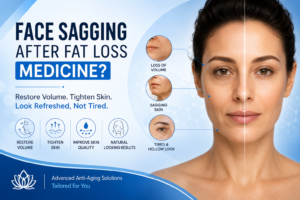
Losing weight can significantly improve your overall health, but many people are surprised to notice an unexpected change in the mirror—a thinner face that suddenly looks older, tired, or saggy. This has become increasingly common with the widespread use of GLP-1 receptor agonists such as Ozempic (semaglutide), Wegovy (semaglutide), and Mounjaro (tirzepatide). Social media has even coined the term “Ozempic Face.”
Although these medications do not directly damage your skin, rapid weight loss can reduce the natural fat that supports your facial structure. As facial volume decreases, fine lines, wrinkles, and loose skin may become more noticeable, particularly in people over the age of 35.
In this article, Dr. Lipy Gupta, a cosmetic dermatologist in Delhi, explains why facial sagging occurs after weight-loss medications, who is most at risk, and the evidence-based treatments available to restore facial harmony while maintaining your weight-loss results.
What Is “Ozempic Face”?
“Ozempic Face” is not a medical diagnosis. It is an informal term used to describe facial changes that can occur after significant or rapid weight loss.
Common changes include:
- Hollow cheeks
- Sunken temples
- Loose jawline
- More prominent smile lines
- Sagging around the mouth
- Under-eye hollows
- More visible wrinkles
- Neck skin laxity
These changes are largely related to the loss of facial fat pads, not to the medication itself. Experts note that similar changes can occur after weight loss from bariatric surgery, strict dieting, or intense exercise.
Do Weight Loss Medicines Cause Facial Sagging?
The short answer is indirectly.
Medications such as Ozempic, Wegovy, and Mounjaro work by reducing appetite and helping people lose weight. When body fat decreases rapidly, facial fat also decreases.
Your face contains multiple fat compartments that:
- Support the cheeks
- Maintain jawline definition
- Cushion facial muscles
- Create youthful facial contours
When these fat pads shrink quickly, the overlying skin may not tighten at the same rate, leading to a more aged appearance.
Why Does the Face Look Older After Weight Loss?
Several biological changes occur simultaneously.
- Loss of Facial Fat
Fat acts as a natural filler.
When fat decreases:
- Cheeks flatten
- Temples hollow
- Under-eye shadows deepen
- Smile lines appear more prominent
- Reduced Skin Elasticity
As we age, collagen and elastin production naturally decline.
If rapid weight loss occurs after age 35–40, the skin may not retract completely, making laxity more visible.
- Collagen Decline
From the late 20s onward, collagen production gradually decreases each year. Combined with volume loss, this contributes to thinner, less resilient skin.
- Existing Skin Quality
People with:
- Sun damage
- Smoking history
- Poor skincare
- Chronic dehydration
- Significant weight fluctuations
may notice facial sagging more prominently.
Who Is Most Likely to Experience Face Sagging?
The likelihood increases if you:
- Lose more than 10–15 kg in a short period
- Are over 35 years old
- Already have mild skin laxity
- Have naturally lean facial features
- Lose weight very rapidly
- Have experienced repeated cycles of weight gain and loss
Not everyone taking GLP-1 medications develops noticeable facial changes.
Common Signs of Facial Volume Loss
You may notice:
- Hollow cheeks
- Under-eye hollowness
- A less defined jawline
- Sagging around the mouth
- More visible nasolabial folds
- Fine wrinkles becoming deeper
- Loose neck skin
- A tired or gaunt appearance despite feeling healthier
Can Facial Sagging Improve on Its Own?
Minor skin laxity may improve over several months if weight stabilizes and skin quality is good.
However, lost facial fat does not naturally regenerate, and established volume loss usually requires cosmetic intervention if it is bothersome.
Dermatologist-Recommended Treatments
Treatment should be individualized based on the degree of volume loss, skin laxity, and overall facial anatomy.
- Hyaluronic Acid Dermal Fillers
Dermal fillers can restore volume to:
- Cheeks
- Temples
- Chin
- Jawline
- Nasolabial folds
- Marionette lines
The goal is subtle restoration rather than creating an overfilled appearance.
- Profhilo
Profhilo is a high-purity hyaluronic acid injectable that improves:
- Skin hydration
- Elasticity
- Fine lines
- Skin firmness
It is particularly useful when skin quality has declined after weight loss.
- Morpheus8
Morpheus8 combines microneedling with radiofrequency energy to stimulate collagen remodeling.
Benefits include:
- Skin tightening
- Improved texture
- Reduction in mild to moderate laxity
- Better definition of the lower face
- HIFU (High-Intensity Focused Ultrasound)
HIFU targets deeper tissue layers to lift and tighten the face without surgery.
Common treatment areas include:
- Jawline
- Neck
- Lower face
- Brow
- Medical Skincare
A dermatologist may also recommend:
- Prescription retinoids
- Vitamin C serums
- Peptides
- Broad-spectrum sunscreen
- Barrier-repair moisturizers
These products help support collagen production and maintain skin quality.
Can You Prevent Face Sagging During Weight Loss?
While some facial changes are unavoidable, you may reduce their impact by:
- Losing weight gradually when medically appropriate
- Maintaining adequate protein intake
- Staying well hydrated
- Protecting your skin from UV damage
- Following a dermatologist-recommended skincare routine
- Discussing preventive treatment options if significant weight loss is expected
Should You Stop Taking Weight Loss Medication?
No. If a medication has been prescribed for obesity or diabetes and is benefiting your health, do not stop it solely because of facial changes without discussing it with your treating physician.
Instead, consult a dermatologist to explore safe, non-surgical options for facial rejuvenation.
Why a Customized Approach Matters
Every face ages differently. Treating facial sagging is not about replacing every bit of lost volume—it is about restoring balance while preserving natural expressions.
An experienced cosmetic dermatologist evaluates:
- Facial proportions
- Skin quality
- Bone structure
- Degree of volume loss
- Patient goals
to design a personalized treatment plan.
Why Patients Consult Dr. Lipy Gupta
Dr. Lipy Gupta specializes in non-surgical facial rejuvenation and offers customized treatment plans that may include:
- Dermal fillers
- Profhilo
- Morpheus8
- HIFU
- Medical skincare
- Combination anti-aging protocols
Her focus is on achieving refreshed, natural-looking results while maintaining facial harmony.
Frequently Asked Questions
Does Ozempic directly cause skin sagging?
No. The medication itself does not damage the skin. Facial changes are primarily related to rapid weight and fat loss.
Is “Ozempic Face” permanent?
The loss of facial fat may persist if weight remains stable. However, many cosmetic treatments can effectively restore volume and improve skin quality.
Which treatment works best?
There is no single best treatment. Depending on the individual’s concerns, a combination of dermal fillers, Profhilo, Morpheus8, HIFU, and medical skincare may provide the most balanced results.
Can younger people develop facial sagging after weight-loss injections?
Yes, although it is generally less noticeable because younger skin has greater collagen and elasticity.
How soon after weight loss should I consider treatment?
It is often advisable to wait until your weight has stabilized before pursuing volume restoration, unless advised otherwise by your dermatologist.
Conclusion
Rapid weight loss—whether achieved through lifestyle changes, bariatric surgery, or medications such as Ozempic, Wegovy, or Mounjaro—can reveal facial volume loss and skin laxity in some individuals. These changes are a consequence of fat loss rather than a harmful effect of the medications themselves.
The good news is that modern cosmetic dermatology offers a range of minimally invasive options to restore facial balance, improve skin quality, and maintain natural-looking results. If facial sagging after weight loss is affecting your confidence, a consultation with an experienced cosmetic dermatologist can help determine the most appropriate treatment plan.